THE IDEA IN ONE LINE
If a difficult month leaves a shortfall, work on the income and bill gap before committing to optional transfers.
A plan for your next payday
Write down your next payment and the bills due before it arrives. Use the checklist to work through the gap before planning optional transfers.
- Cash flowKnow what is left after bills.
- ProtectionPlan for a loss of income.
- GoalsPut a cost and date on the plan.
- GrowthBuild long-term options.
Your checkmarks stay in this browser when storage is available. The checklist asks for no income figures or account details.
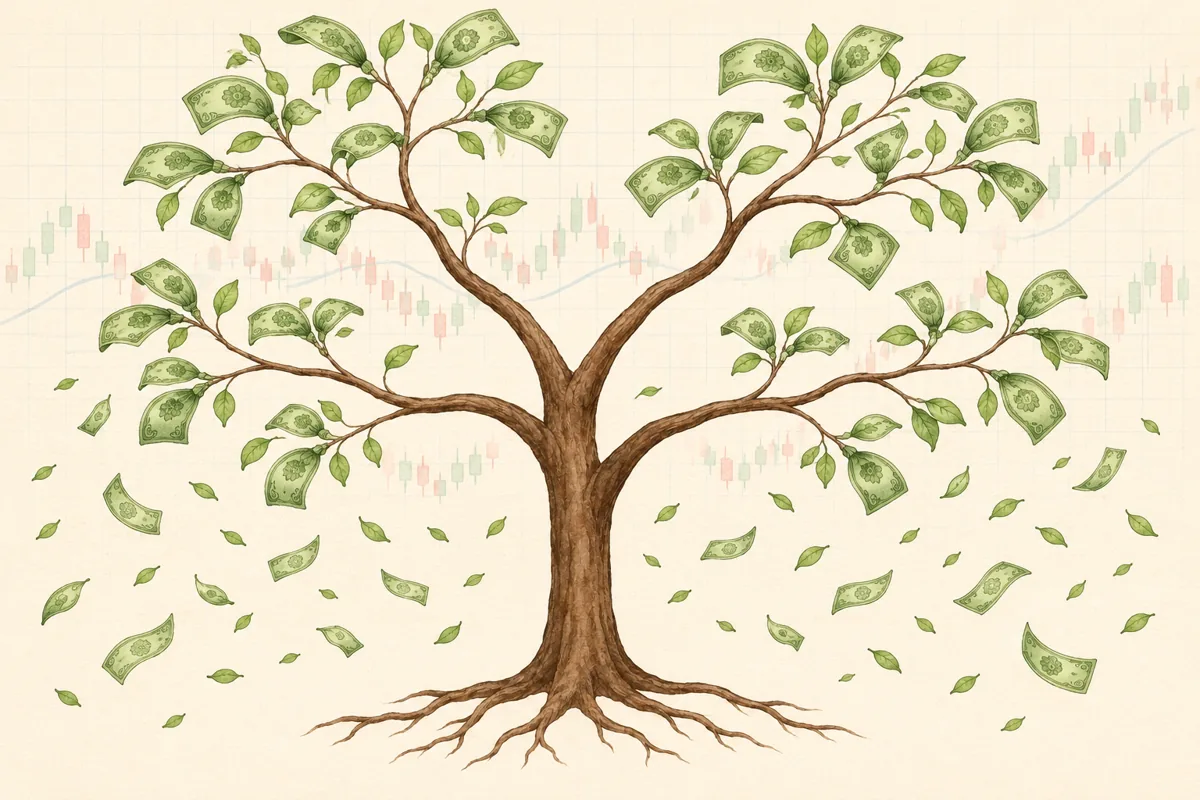
Root of the tree
1. Secure the income that supports your plan
Start with your main recurring source: a job, repeat freelance work, a pension or benefits you can reasonably expect. Write down when the next payment is due, what arrives after deductions and what might interrupt it. For self-employment, set aside business costs and estimated taxes before treating the remainder as money available for the household.
If you need to establish income, choose a route for this week. Search for suitable roles, contact paying clients or check eligibility for support. Turn the route into a concrete action with a date.
Need help? Build a job search plan. Find local help with applications, training and job leads.
Cash flow
Make the month work
-
Close an income gap
Compare the money you expect before your next payday with the bills due before then. If you fall short, protect housing, utilities and the costs that keep you working. Contact providers early to ask about payment options. Set a date to review job applications, new client leads or support requests.
Need help? Prioritize bills when money is tight. Sort bills by what they protect and contact providers about payment options.
-
Set a conservative income baseline
Use several recent months of net income. If earnings vary, budget around a lower, repeatable month and give stronger months a job, such as topping up savings or covering taxes. If your pay is steady, use your regular take-home pay.
Need help? Make a cash-flow budget. Use recent income and spending to choose a realistic baseline.
-
Write down what it costs to get through a month
Use actual statements to list housing, groceries, utilities, transport, insurance and required debt payments. Separate flexible spending. Add a monthly share of annual bills such as insurance or vehicle registration.
Need help? Work out your true monthly costs. Use several months of spending to catch bills that arrive less often.
-
Put bills and paydays on the same calendar
Plot the dates and your running balance. A monthly surplus can still hide a cash shortage between bills and payday. If it does, ask whether a due date can move or keep part of the previous payment available.
Need help? Build a bill calendar. Put bill dates and income dates together so you can spot a short week.
Financial protection
Protect what you earn
-
Build a starter emergency reserve
Pick a first target tied to an actual surprise, such as a repair or a missed week of pay. Keep the money separate and easy to access. Set a transfer you can sustain without falling behind on essential bills.
Need help? Start an emergency fund. Pick a first savings target and a manageable way to reach it.
-
Make a plan for expensive debt
For each debt, note the balance, annual , minimum payment and any promotional expiry. Once essentials and required payments are covered, prioritising extra repayments on the highest-rate debt generally reduces interest costs. Check early-repayment terms and contact the lender if you cannot meet a payment.
Need help? See what credit card minimums cost. Compare interest and repayment time before choosing how much extra to pay.
-
Prepare for a longer income interruption
Estimate how many months your accessible savings would cover at your essential spending level. Then consider how long it might take to replace income, what insurance covers and which benefits could apply. Pick a reserve target that reflects your household and income stability.
Need help? Make a plan for losing income. Work through benefits, insurance, bills and housing if a paycheck stops.
Medium-term goals
Plan the next few years
-
Turn each goal into a monthly number
Write the cost, deadline and amount already saved. Divide the remaining cost by the months left. If the result takes more than your spare cash, change the date, the target or your income plan.
Need help? Set your savings goal and deadline. Choose a target and convert it into a regular contribution.
-
Separate expected bills from surprises
Put money aside for known costs such as a move, annual taxes or replacing a car. Keep these funds distinct from emergency savings. Update the target when your quote or schedule changes.
Need help? Make room for known future expenses. See how a regular contribution changes what you can set aside.
-
Check big commitments against a difficult month
Before taking a lease or , include recurring costs beyond the rent or loan payment. Test the total against lower income and higher bills. Keep the upfront cash requirement separate from what you can afford each month.
Use the rent-or-buy guide and calculator.
Need help? Test the cost of renting or buying. Compare total housing costs against your income and cash on hand.
Long-term growth
Grow your options over time
-
Review retirement benefits before picking products
Check what your public or workplace pension provides. If your employer matches contributions, read how much it matches, how long you must stay to keep the money and which fees apply. Compare the benefit with your immediate cash needs.
Need help? Check your U.S. employer match and vesting rules. Find the plan documents and see when employer contributions become yours.
-
Match investment risk to when you need the money
Separate cash you may need soon from money for longer goals. For long-term investing, compare fees, possible losses and how much depends on any one company or asset. Picture what a large drop would mean in dollars before choosing how much risk to take.
Explore the investment risk scale.
Need help? Compare investment risks by time horizon. See how possible losses and liquidity vary between investment types.
-
Build a backup for your main income
Pick a skill, qualification or client relationship you can develop without putting essential income at risk. For a side project, track profit after expenses, taxes and time. Treat it as extra until it becomes repeatable.
Need help? Compare the cost and payoff of training. Use earnings, tuition and time away from work to assess a qualification.
-
Review the plan after each payday
Check what came in, what is due next and whether your priorities changed. If your income drops, return to the first branch. If it rises, decide how much of the increase to assign to your next goal before adding recurring spending.
Need help? Review and adjust your cash flow. Use the CFPB toolkit to revisit income, bills and upcoming expenses.
What happens when income falls?
| Monthly figures | Base case | Lower income |
|---|---|---|
| Take-home pay | $2,400 | $2,000 |
| Essential costs and commitments | $2,050 | $2,050 |
| Cash left before optional transfers | +$350 | −$50 |
Say your reliable take-home pay is $2,400 and essential costs, required debt payments and the monthly share of annual bills come to $2,050. That leaves $350. You might assign $150 to an emergency reserve, $100 to extra debt payments and $100 to a planned expense.
If your take-home pay drops to $2,000, the same plan runs $50 short before any of those transfers. Recheck bill dates and immediate obligations, pause or adjust the optional transfers, and work on the income gap first. Both scenarios are illustrative.